


NCAT Test Track Case Study
OKDOT N9 NCAT Test Track: Elastiko® ECR Performance in a BMD-Designed Dry GTR Mix
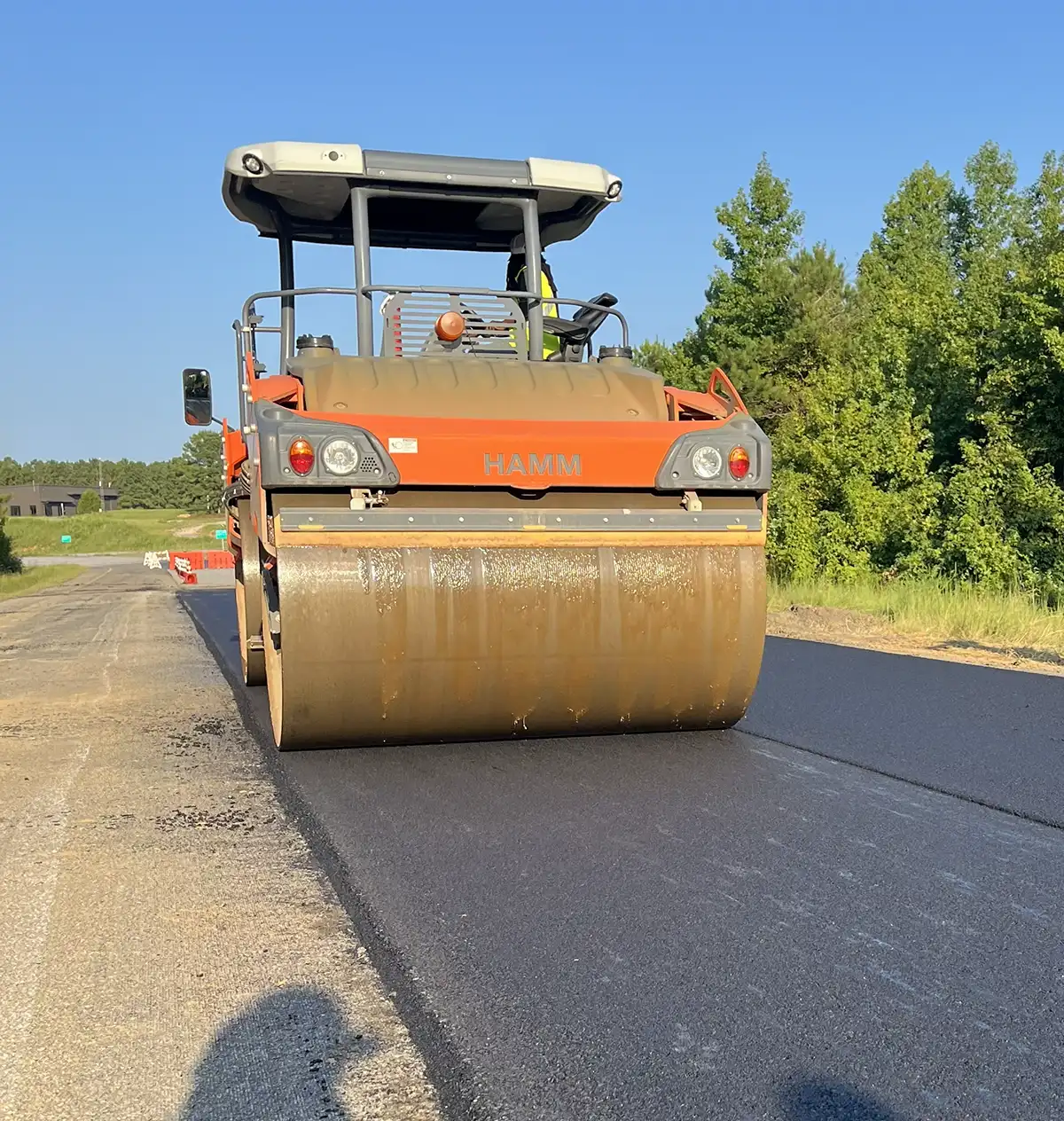
NCAT test-track data shows Elastiko® Engineered Crumb Rubber (ECR) modified asphalt mix outperforms a polymer-modified mix. When compared to the polymer modified control, the ECR pavement has less cracking, comparable rutting and comparable roughness.
Agency / Sponsor
Oklahoma Department of Transportation.
Product
Elastiko® Engineered Crumb Rubber.
Material Type
Dry-process GTR / asphalt mix modifier.
Application
1.5-inch mill/inlay.
Mix Design Approach
Balanced Mix Design.
Long-Term Goal
Current NCAT updates report field performance through 17.5 million ESALs with a goal of 20 million ESALs.
Mix Design & Materials Used in OKDOT N9
Current NCAT updates report field performance through 17.5 million ESALs with a goal of 20 million ESALs.

ECR Dosage
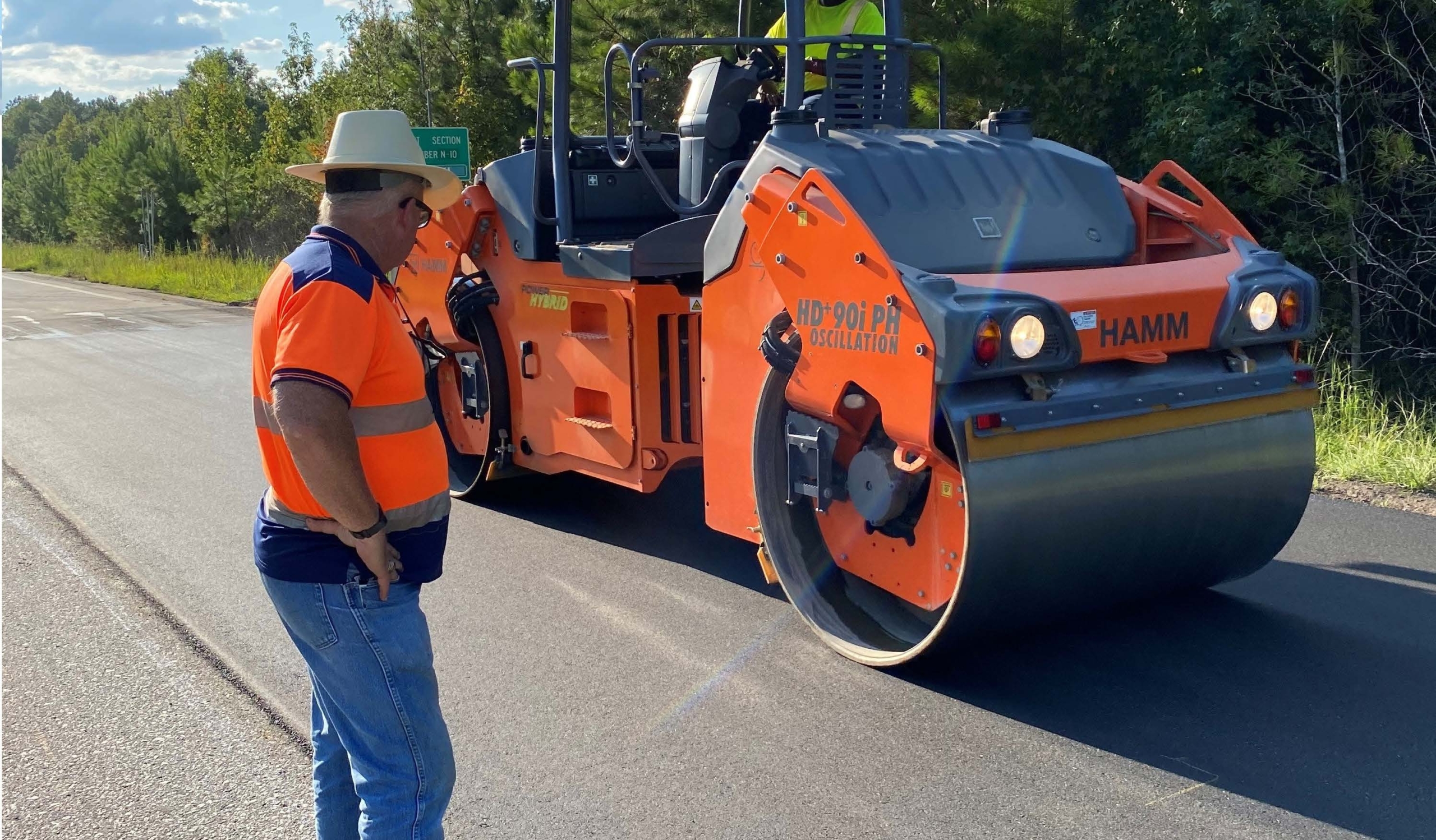
The N9 section used 12% GTR Elastiko® ECR by weight of neat binder.
Production Method
Elastiko® ECR was added dry during asphalt production.
Base Binder / GTR Design
The dense-graded ECR mix design included a PG 58-28 binder plus 12% ECR, 5.8% Total AC, and mixture-level performance testing.
Performance Update
At 17.5 million ESALs, NCAT reports that the N-9 ECR section continues to outperform the polymer control for cracking performance, while rutting and roughness are reported as comparable and steady.
Field Cracking
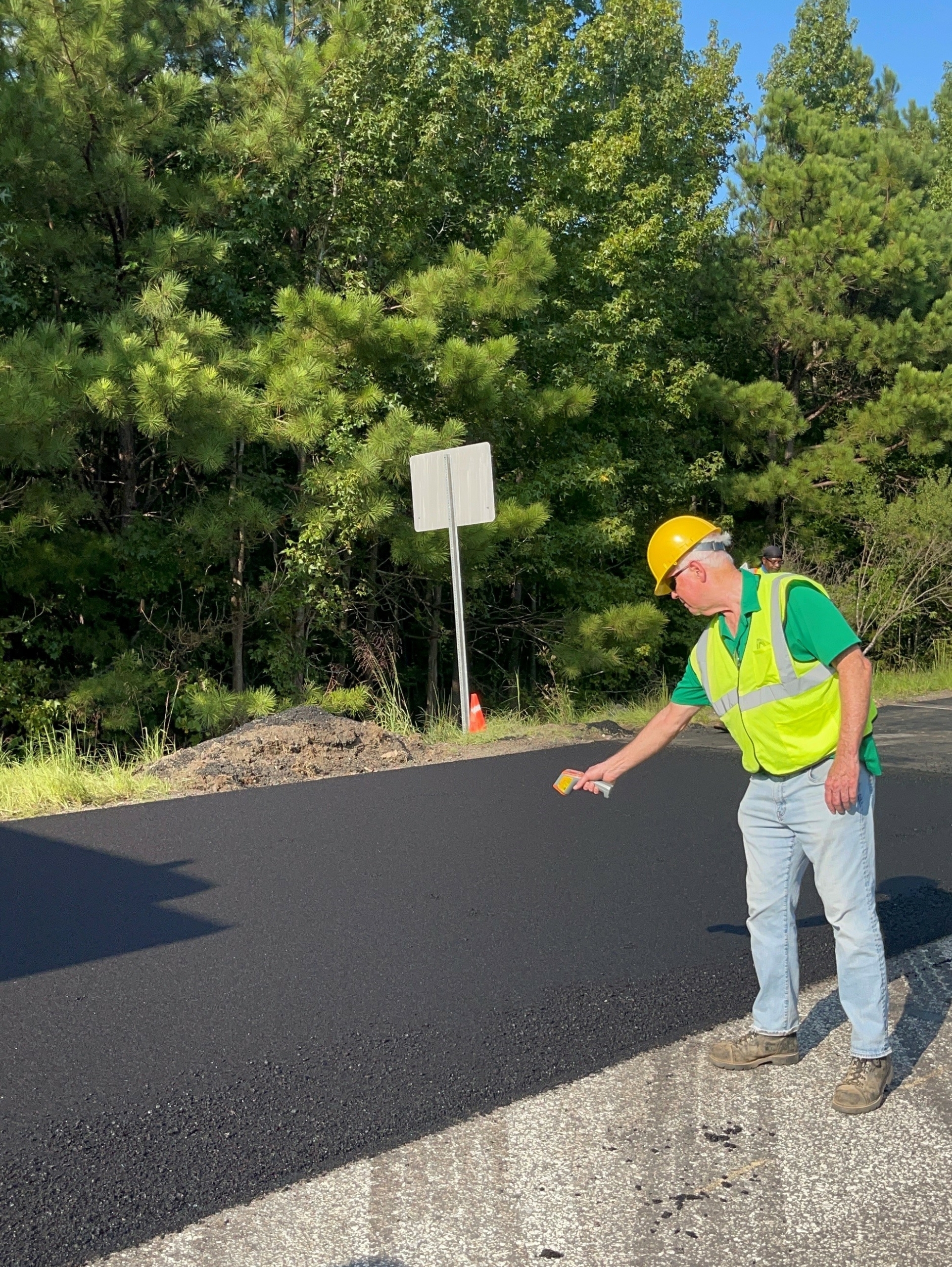
At 17.5 million ESALs, the N-9 ECR section continues to outperform the polymer control for cracking performance.
Rutting and Roughness
Rutting and roughness are reported as comparable to the polymer control and steady.
Important Performance Statement
The NCAT update shows that the ECR section continued to perform under accelerated traffic loading and delivered stronger cracking performance than the polymer control.
Performance Details
Key NCAT Data Points
A quick look at the mix design details, production method, lab testing values, and long-term monitoring status documented in the NCAT update.
ECR Dosage
12% GTR Elastiko® ECR by weight of neat binder.
Production Method
Added dry during production.
Total AC Content
5.8% Total AC.
IDEAL-CT CTIndex
64.7 at 25 C.
HWTT Result
15,600 passes to 12.5 mm with 0.5% LAS.
Field Performance
Reported through 17.5 million ESALs with a goal of 20 million ESALs.
Study Flow
Challenge, Solution, and Results
Challenge
OKDOT and NCAT sought to evaluate the long-term performance of a ECR mix designed using a Balanced Mix Design approach. The section also provided an opportunity to compare performance against a previous N9 section with the same mix design, aggregate and gradation but with a PG 76-22 binder.
Solution
The N9 section used 12% GTR Elastiko® ECR by weight of neat binder, added dry during asphalt production. The dense-graded ECR mix design included a PG 58-28 binder plus 12% ECR, 5.8% Total AC, and mixture-level performance testing.
What the Results Show
The NCAT update shows that the OKDOT N9 section continued to perform under accelerated traffic loading. At 17.5 million ESALs, the ECR pavement continued to outperform the polymer control for cracking, while rutting and IRI remained comparable to the polymer control and steady.
Why This Study Matters
Why This Study Matters
The OKDOT N9 study is important because it confirms the field performance of Elastiko® ECR as a viable alternative to the use of polymer modified mixes in heavy traffic roads.
Next Steps
Review the OKDOT N9 NCAT Findings
Use the summary and full report to review how the OKDOT N9 section was designed, placed, tested, and monitored through the NCAT Test Track program.
Read the Full OKDOT N9 NCAT Summary
See how the OKDOT N9 section was designed, placed, tested, and monitored through the NCAT Test Track program.
Read the Full NCAT ReportView ECR Case Studies
Review case studies for mix design details, field performance charts, and long-term monitoring notes.
View ECR Case StudiesBrief Summary
The OKDOT N9 NCAT update documents Elastiko® ECR as a dry-process asphalt mix modifier used in a BMD-designed GTR mix. At 17.5 million ESALs, the ECR pavement continued to outperform the polymer control for cracking, while rutting and IRI remained comparable to the polymer control and steady.
Request Webinar
Use the form below and we’ll follow up with specs, guidance, and next steps.