How Rubber Improves Asphalt Cracking Resistance
Learn how asphalt pavements using recycled tires improve cracking resistance, rutting resistance, sustainability, and long-term value for road owners and contractors.
Cracking is one of the most persistent and costly forms of asphalt pavement distress. Whether it appears as fatigue cracking from repeated traffic loading, thermal cracking from temperature cycles, or reflective cracking from movement in underlying pavement layers, cracking allows water into the pavement structure, accelerates deterioration, and shortens service life.
For agencies, contractors, and asphalt producers, improving asphalt cracking resistance is not just a performance goal. It is a lifecycle cost strategy.
Rubberized asphalt, especially dry-process mixtures using Elastiko® Engineered Crumb Rubber, improves cracking resistance by changing how the asphalt mixture responds to stress. Rather than relying only on binder-grade selection, Elastiko ECR modifies the mixture itself, introducing fine rubber particles that interact with asphalt binder and aggregates during production, storage, transportation, paving, and compaction.
This article explains how rubberized asphalt improves asphalt cracking resistance at the mixture level.
- Why asphalt cracking resistance matters for pavement service life
- How dry-process rubberized asphalt works as a mixture modifier
- How crack deflection and crack pinning help slow crack growth
- Why binder absorption and rubber swelling improve fracture resistance
- Why particle size and binder film thickness are critical to performance
- How laboratory and field results support ECR-modified asphalt mixtures
Rubberized Asphalt Works at the Mixture Level
One of the most important engineering concepts behind dry-process rubberized asphalt is that Engineered Crumb Rubber acts as a mix modifier, not simply a binder modifier. In wet-process systems, rubber is blended into asphalt binder before mix production. In dry-process ECR systems, the rubber is added directly into the asphalt plant and becomes part of the asphalt mixture structure.
Asphalt Plus Technical Bulletin 4 explains that properly designed and applied ASTM-compliant ECR can meet or exceed the performance benefits delivered by binder modification with rubber or polymers. The bulletin identifies two key mechanisms behind performance improvement: mix stiffening and rubber crumb crack deflection/pinning.
That distinction matters. Asphalt cracking resistance is not controlled by binder properties alone. Pavement cracking is a mixture-level failure involving aggregate structure, binder film thickness, air voids, traffic loading, temperature, aging, and stress concentration.
Because dry-process ECR is distributed throughout the mixture, it contributes directly to the way cracks initiate, move, and dissipate energy.
Crack Deflection and Crack Pinning
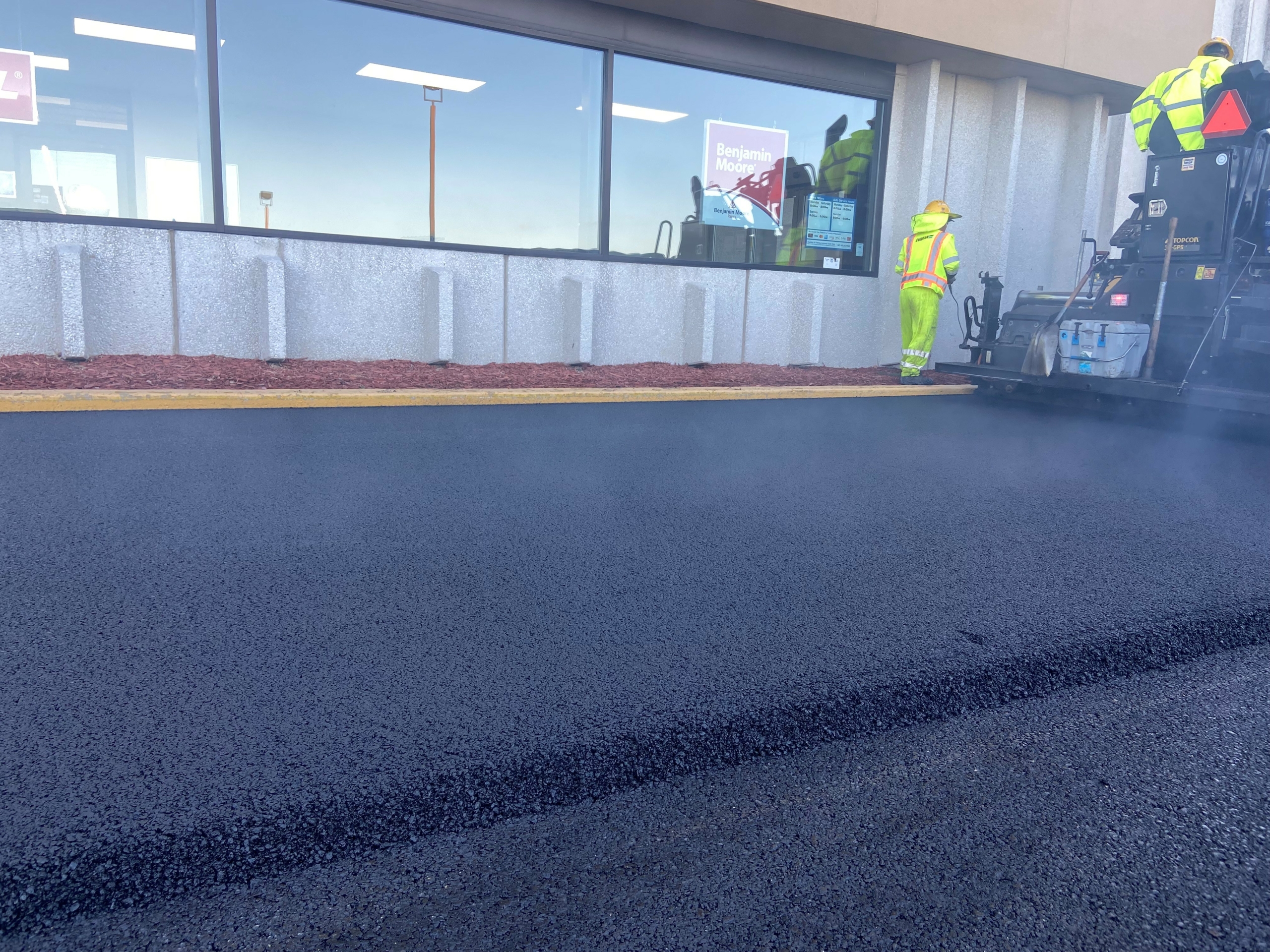
When a crack begins to form in a conventional asphalt mixture, it tends to follow the path of least resistance through the mastic and aggregate structure. Rubberized asphalt changes that crack path.
Fine rubber particles dispersed throughout the mix act as flexible inclusions. As a crack front encounters rubber particles, the crack may be slowed, redirected, or locally arrested. This is often described as crack deflection and crack pinning.
Crack deflection forces the fracture path to move around rubber particles instead of traveling directly through the mixture. Crack pinning helps resist crack opening by creating small points of resistance within the fracture zone. Together, these mechanisms increase the amount of energy required for a crack to grow.
In practical terms, the pavement can absorb more strain before cracking becomes visible and connected. This is especially valuable in overlays, high-traffic pavements, and climates where thermal movement places repeated stress on the asphalt layer.
Binder Absorption and Rubber Swelling
Another important mechanism behind improved asphalt cracking resistance is the interaction between crumb rubber and asphalt binder. ECR particles do not melt at asphalt plant temperatures. Instead, the surface pores of the rubber absorb lighter fractions of the asphalt binder when exposed to heat.
This interaction causes the rubber particles to swell and become more integrated into the asphalt mastic.
Technical Bulletin 2 explains that when ECR is added to a mix, the fine gradation and lower bulk density create significant additional surface area. After mixing heated binder with aggregates and ECR, a portion of the binder film is absorbed into the surface pores of the rubber, increasing rubber grain size and improving resistance to crack propagation.
This swelling process is central to the performance benefit. As rubber particles absorb binder and expand, they become more effective at interacting with the surrounding mastic. That improves the mixture’s ability to resist fracture and dissipate stress.
Particle Size Matters for Asphalt Cracking Resistance
The cracking resistance benefit of rubberized asphalt depends heavily on particle size. Smaller particles create more surface area, which increases binder interaction and improves dispersion within the mix.
Elastiko ECR is engineered to meet minus-30 mesh requirements, with a mean particle size around 50 mesh, or approximately 0.5 mm. Technical Bulletin 15 describes ECR as a controlled product with engineered particle size, density, moisture, and metal content. The product meets ASTM D5603-23 as a minus-30 mesh material and has a mean particle size of about 50 mesh.
Fine particle size allows rubber to distribute throughout the mixture like a fine aggregate or additive. Instead of a few large rubber particles creating isolated effects, many fine particles create a broad network of crack-resisting inclusions.
This helps explain why rubber content and rubber surface area are both critical engineering variables when designing mixtures for improved asphalt pavement cracking resistance.
Binder Film Thickness Is Still Critical
Rubberized asphalt is not simply a matter of adding rubber and expecting better performance. The mix design must account for the additional surface area created by ECR. Because rubber particles absorb binder and require coating, supplemental binder is often needed to preserve proper binder film thickness.
Technical Bulletin 2 states that ECR requires a binder film like other aggregate particles and recommends supplemental binder to account for the added surface area and absorption effects. It also warns that failure to include appropriate supplemental binder can result in a drier mix that does not compact properly and becomes more prone to cracking.
This is a key point for agencies and mix designers. Rubber improves asphalt cracking resistance when the mix is properly designed. If the mix is starved of binder, the benefits of rubber can be undermined.
Balanced Mix Design, volumetric checks, and performance testing help ensure that ECR-modified mixtures deliver both rutting resistance and cracking resistance.
Rubber improves asphalt cracking resistance most effectively when particle size, rubber content, supplemental binder, compaction, and mixture-level performance testing are all considered together.
Field and Laboratory Validation
Rubberized asphalt cracking resistance is supported by both laboratory testing and field experience. Technical Bulletin 4 cites NCAT Test Track performance, noting that Section N-9, a dense-graded ECR surface mix in a fatigue cracking region, exhibited 0% cracking and 4 mm of rutting after 7.2 million ESALs.
The same bulletin also reports that Illinois Tollway ECR-modified SMA mixes produced DCT results ranging from 650 to 1,300 J/m², indicating significant resistance to thermal cracking.
Those results are important because they demonstrate the balanced nature of ECR modification. Pavement owners do not want to solve cracking at the expense of rutting. Elastiko ECR is designed to improve cracking resistance while maintaining strong high-temperature performance.
Why Asphalt Cracking Resistance Matters for Pavement Owners
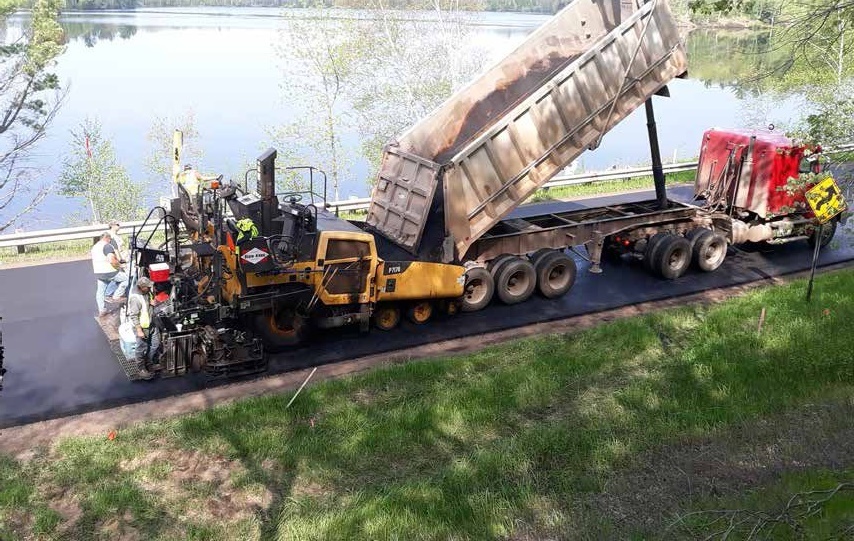
Cracking resistance affects every stage of pavement life. A pavement that resists cracking longer keeps water out, slows oxidation, protects lower layers, and delays the need for maintenance. For DOTs and municipalities, that means better use of limited infrastructure budgets.
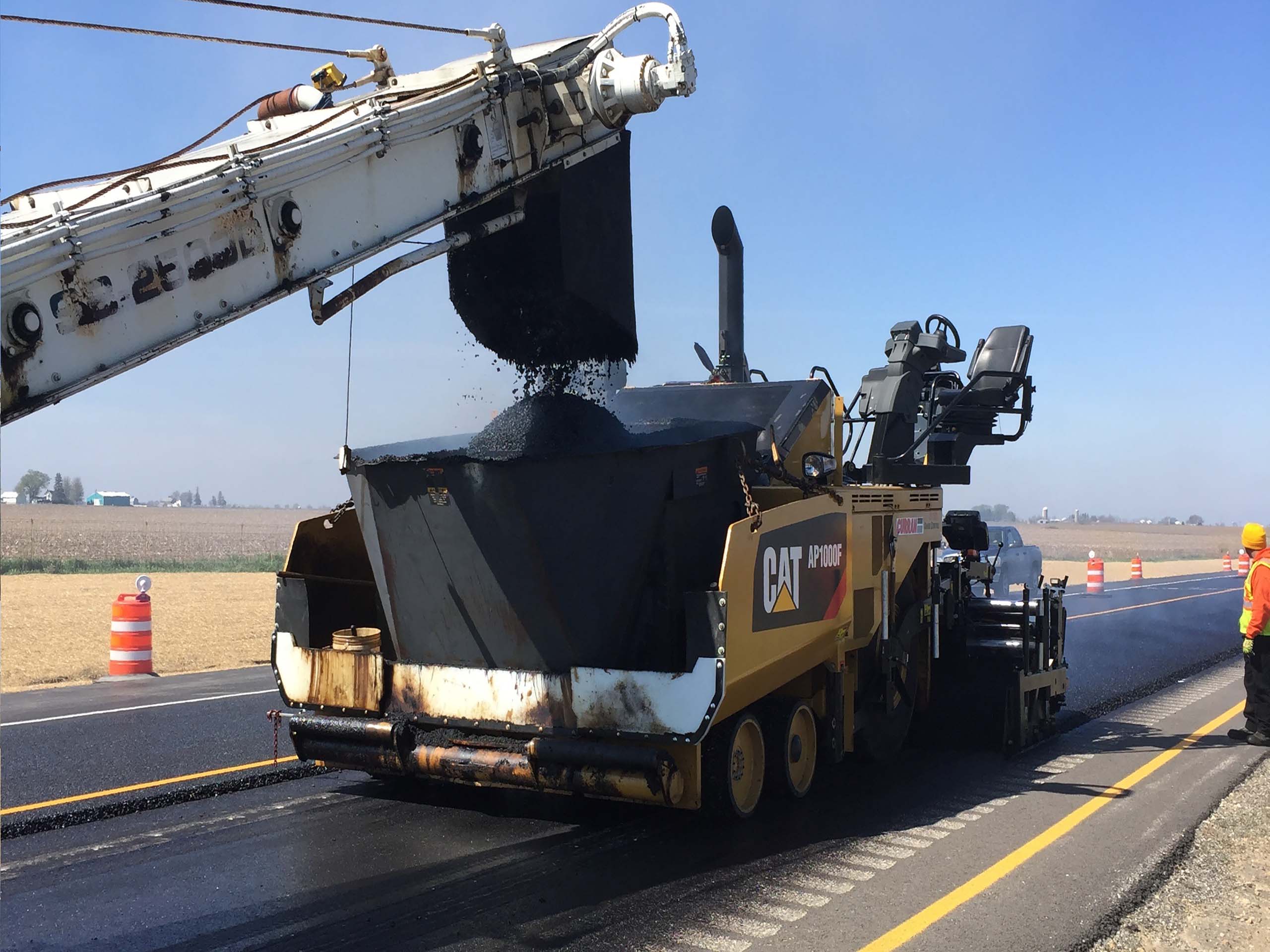
For contractors and producers, dry-process rubberized asphalt provides a high-performance mix that can be produced through existing plant systems without terminal blending.
Dry-process rubberized asphalt also adds sustainability value by recycling scrap tire rubber into long-life pavement infrastructure. Instead of treating waste tires as a disposal problem, Elastiko ECR converts them into an engineered pavement modifier that improves performance.
A Better Approach to Durable Asphalt
Rubberized asphalt improves asphalt cracking resistance because it changes the way asphalt mixtures manage stress. Fine ECR particles absorb binder, swell, disperse through the mix, deflect cracks, pin crack growth, and increase the fracture energy required for cracking to propagate.
For pavement engineers, the takeaway is clear: cracking resistance should be designed at the mixture level. Elastiko® ECR gives agencies, producers, and contractors a practical dry-process technology for building asphalt pavements that are more durable, more sustainable, and more cost-effective over their service life.
Ready to Improve Asphalt Cracking Resistance?
Asphalt Plus helps agencies, asphalt producers, contractors, and consultants implement Elastiko® Engineered Crumb Rubber technology for high-performance dry-process rubberized asphalt.
Whether you are evaluating cracking resistance, comparing rubberized asphalt to polymer-modified mixtures, or planning a field trial, our team can help you assess the performance, production, and economic benefits of ECR for your application.