
Rigid vs. Flexible Pavement: Why Flexibility Can Outperform Under Heavy Traffic
When agencies, engineers, and infrastructure planners compare pavement systems, the discussion often begins with a familiar question: should a roadway be built with rigid pavement or flexible pavement?
Rigid pavement, typically concrete, is known for high compressive strength and load-spreading capacity. Flexible asphalt pavement, by contrast, is designed as a layered system that distributes traffic loads through engineered asphalt mixtures, base materials, and subgrade support. While rigid pavement has long been associated with structural durability, heavy traffic environments increasingly show the value of pavement systems that can absorb strain, resist cracking, and be maintained efficiently over time.
For high-volume roads, truck corridors, urban arterials, and interstate overlays, flexibility is not a weakness. When properly designed, it can be a major performance advantage.
This article compares rigid pavement and flexible pavement for heavy traffic applications and explains why engineered asphalt systems can provide strong lifecycle value.
- The core difference between rigid pavement and flexible pavement
- Why flexibility matters under repeated truck loading
- How flexible asphalt pavement manages cracking, rutting, and strain
- Why asphalt pavement is often easier to maintain and rehabilitate
- How smoothness, safety, and sustainability influence pavement value
- Why modern flexible pavement is an engineered asphalt system
What Is the Difference Between Rigid and Flexible Pavement?
Rigid pavement is usually made with portland cement concrete. It relies on slab action to carry traffic loads across a relatively stiff surface. Because concrete has a high modulus, it spreads wheel loads over a broad area. This can make rigid pavement effective for certain heavy-load applications, especially when subgrade conditions are stable and joints are properly designed.
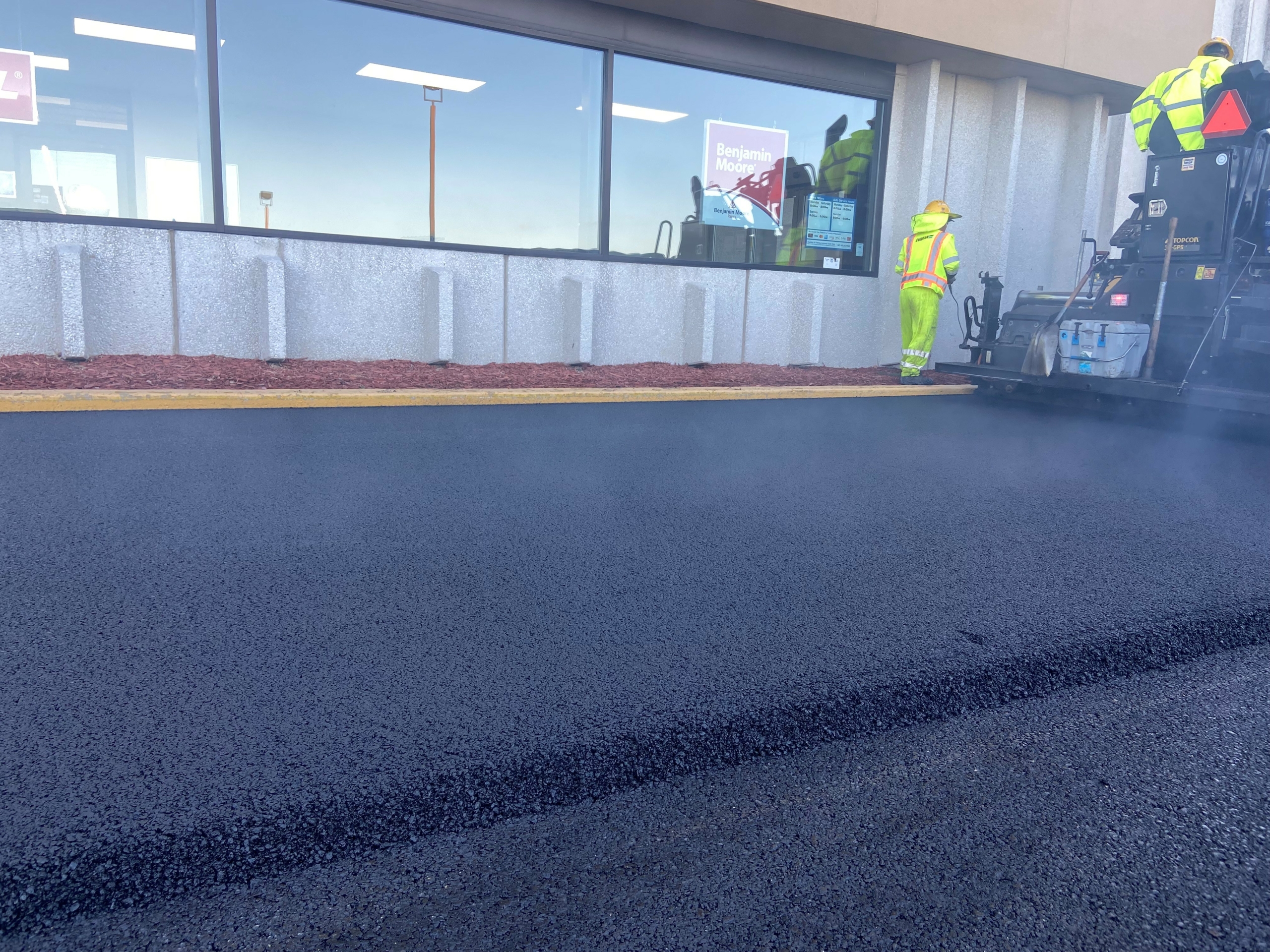
Flexible pavement is usually asphalt-based. Instead of acting as a single stiff slab, it functions as a layered structure. The asphalt surface, intermediate courses, base, and subbase work together to absorb and distribute traffic stresses. The system is designed to flex slightly under load and recover after traffic passes.
That ability to move, respond, and recover is central to the performance of flexible pavement.
Why Flexible Pavement Matters Under Heavy Traffic
Heavy traffic does not apply one single load. It applies repeated loading over years of service. Trucks create stress cycles that can lead to rutting, fatigue cracking, thermal cracking, reflective cracking, and moisture-related distress. A pavement system must not only carry the load; it must survive millions of load repetitions.
Rigid systems resist movement. That stiffness can be beneficial, but it can also concentrate stress at joints, slab edges, corners, and cracks. Once cracking begins, rigid pavement repairs can become complex and expensive.
Asphalt pavement is engineered to manage repeated strain. A well-designed flexible structure can absorb small movements without immediate fracture. This is especially important in climates with freeze-thaw cycles, thermal expansion and contraction, variable subgrade support, or heavy truck traffic.
Load Distribution: Stiffness vs. Strain Management
Rigid pavement distributes loads through slab stiffness. Flexible asphalt pavement distributes loads through layer thickness, material quality, binder performance, aggregate structure, and mixture design.
In heavy traffic applications, the key is not simply being stiff. The key is balancing stiffness with durability. A pavement that is too soft may rut. A pavement that is too brittle may crack. The best asphalt mixtures are designed to resist both forms of distress.
This is where modern asphalt technology has advanced significantly. Polymer modification, Balanced Mix Design, stone matrix asphalt, high-performance binders, and engineered rubber modification have changed what asphalt pavements can do under demanding traffic conditions.
Cracking Resistance Is a Major Advantage of Flexible Pavement
One of the most important performance benefits of flexible asphalt systems is their ability to manage cracking. Heavy traffic creates fatigue damage from repeated bending. Temperature changes create expansion and contraction. Existing pavement layers may reflect cracks upward into new overlays.
Rigid pavement can perform well when intact, but once cracks form, they can become structural discontinuities. Joint maintenance, load transfer, dowel performance, and slab support become critical.
Flexible asphalt mixtures can be designed to slow crack initiation and crack propagation. Modified asphalt mixtures, including rubberized asphalt, can improve fracture energy and help interrupt crack movement. In dry-process rubberized asphalt, engineered crumb rubber acts at the mixture level rather than simply modifying the binder. Asphalt Plus Technical Bulletin 4 explains that dry-process ECR enhances performance through mix stiffening and rubber crumb crack deflection and crack pinning.
For heavy traffic, that matters. Pavements fail not only because loads are heavy, but because damage accumulates. A mixture that delays crack growth can extend service life and reduce maintenance frequency.
Rutting Resistance Without Excessive Brittleness
Rutting is another major concern in truck lanes, intersections, slow-speed corridors, and high-temperature regions. Rigid pavement is generally resistant to rutting because concrete does not deform the same way asphalt can. However, modern asphalt mixtures can be engineered for excellent rut resistance without sacrificing flexibility.
This balance is critical. Increasing stiffness may reduce rutting, but excessive stiffness can make a mixture more crack-prone. The goal is not maximum stiffness. The goal is optimized performance.
Flexible pavement design allows engineers to adjust binder grade, aggregate structure, air voids, recycled material content, modifier type, and mixture volumetrics. Balanced Mix Design gives agencies a way to evaluate cracking and rutting together rather than optimizing one at the expense of the other.
For high-traffic asphalt pavements, this makes flexibility a design asset. Engineers can tune the mixture to the actual traffic, climate, and pavement structure.
Flexible pavement performance is not about softness. It is about designing an asphalt structure that balances stiffness, strain tolerance, rutting resistance, and cracking resistance for the roadway's traffic and climate conditions.
Flexible Pavement Is Easier to Maintain and Rehabilitate
One of the strongest arguments for asphalt pavement under heavy traffic is maintainability. Roads do not exist in laboratory conditions. They must remain open to traffic, accommodate utility work, handle emergency repairs, and support phased rehabilitation.
Rigid pavement repairs often require slab removal, curing time, joint restoration, load-transfer repair, or panel replacement. These activities can disrupt traffic and increase user delay costs.
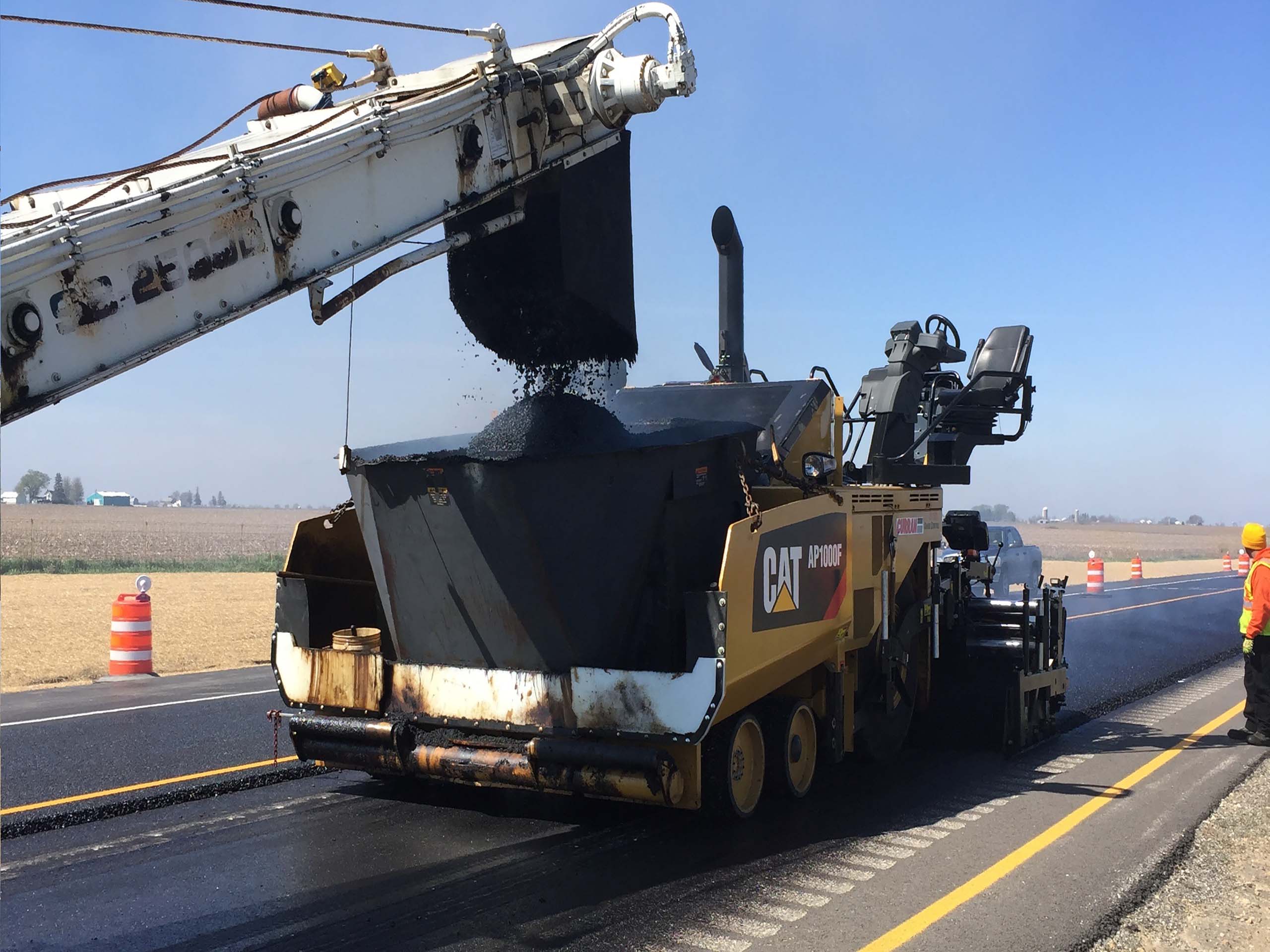
Flexible pavement can often be milled and overlaid quickly. Thin asphalt overlays, surface treatments, localized patching, and staged rehabilitation can restore ride quality and extend pavement life with less downtime. For agencies managing heavily traveled corridors, this matters as much as initial structural capacity.
A pavement that can be renewed efficiently may outperform a more rigid system from a lifecycle perspective, especially when traffic disruption costs are considered.
Smoothness and Ride Quality
Flexible asphalt pavement is also valued for smoothness. A smoother surface reduces vehicle operating costs, improves driver comfort, and can reduce dynamic loading from trucks. Heavy vehicles bouncing over rough pavement create additional impact forces that accelerate deterioration.
Asphalt overlays are commonly used to restore smoothness on both asphalt and concrete pavements. In fact, many rigid pavements eventually receive asphalt overlays because agencies need improved ride quality, noise reduction, or surface renewal.
This is another example of flexibility outperforming rigidity in real-world service. The ability to place a high-performance asphalt surface over an existing structure gives agencies more rehabilitation options.
Noise, Safety, and Surface Characteristics
Rigid and flexible pavement systems also differ in surface texture, tire-pavement noise, and friction behavior. Asphalt mixtures can be designed with specific aggregate gradations and surface characteristics to support skid resistance, spray reduction, and quieter ride quality.
Rubber-modified asphalt can provide additional surface benefits. Asphalt Plus Technical Bulletin 14 discusses how ground tire rubber can reduce draindown risk in certain high-binder mixtures and improve skid resistance through the presence of rubber particles at the pavement surface.
For heavy traffic corridors, safety and surface performance are not secondary issues. Friction, smoothness, and durability all contribute to long-term pavement value.
Sustainability and Material Efficiency
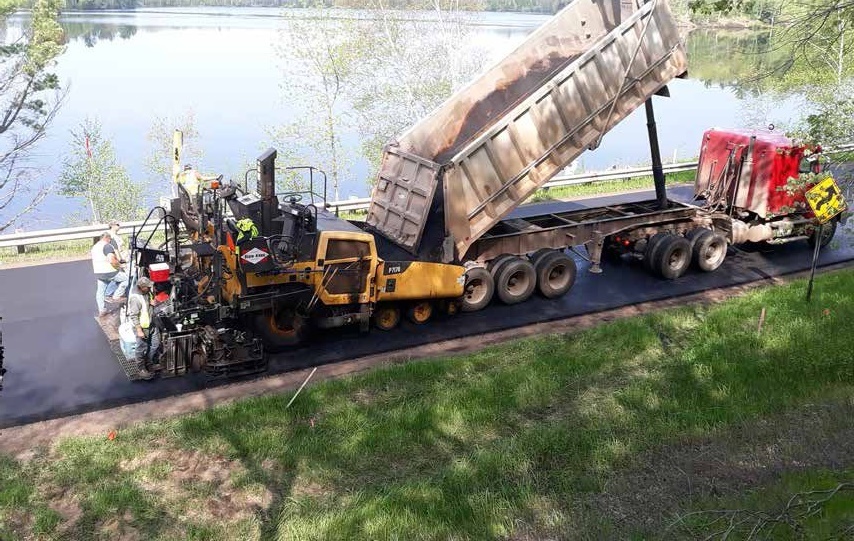
Flexible pavement systems also offer sustainability advantages. Asphalt is highly recyclable, and modern mixtures can incorporate reclaimed asphalt pavement, recycled asphalt shingles where allowed, and recycled tire rubber. These materials can reduce demand for virgin resources while supporting strong engineering performance.
Dry-process engineered crumb rubber is especially relevant for agencies seeking circular infrastructure solutions. Scrap tire rubber can be incorporated into asphalt mixtures as a performance-enhancing material, helping divert waste from landfills while improving pavement durability.
A longer-lasting asphalt surface also supports sustainability by reducing reconstruction frequency, material consumption, trucking, work-zone delays, and emissions associated with repeated maintenance.
When Rigid Pavement Still Makes Sense
This does not mean rigid pavement has no place. Concrete pavements can perform very well in certain applications, including industrial yards, ports, heavy-duty intersections, bus pads, and facilities where extremely high static loads are common. In some regions, concrete may be selected for long design lives or specific agency preferences.
The better question is not which pavement type is universally superior. The better question is which system provides the best performance, cost, constructability, maintainability, and lifecycle value for a specific roadway.
For many heavy traffic applications, flexible asphalt pavement provides advantages that are difficult to ignore: faster construction, easier rehabilitation, smoother ride quality, strong fatigue resistance, and the ability to engineer mixtures for both rutting and cracking performance.
Why Modern Flexible Pavement Is Not “Just Asphalt”
Older comparisons between concrete and asphalt often treat asphalt as a basic material. That view is outdated. Today's asphalt mixtures are engineered systems.
A modern high-performance asphalt mixture may include:
- Polymer-modified binder
- Stone matrix asphalt gradation
- Reclaimed asphalt materials
- Balanced Mix Design validation
- Engineered crumb rubber modification
- Performance testing for cracking and rutting
- Project-specific binder and aggregate optimization
This level of engineering allows flexible pavement to meet demanding performance requirements under heavy traffic.
In particular, mixture modification technologies such as Elastiko® Engineered Crumb Rubber help move the conversation beyond binder grade alone. Dry-process rubberized asphalt can improve mixture-level performance by modifying the asphalt system as a whole, not just the liquid binder.
Flexible Pavement Conclusion
Rigid pavement relies on stiffness. Flexible pavement relies on engineered adaptability.
Under heavy traffic, adaptability can be a major advantage. A properly designed asphalt pavement can absorb repeated loading, resist cracking, manage rutting, improve ride quality, simplify maintenance, and support sustainable material use. With modern mixture design methods and advanced modifiers, flexible asphalt systems can deliver long-term performance in some of the most demanding roadway environments.
For agencies and contractors evaluating pavement options, the goal should not be to choose the stiffest system by default. The goal should be to choose the pavement structure that delivers the best combination of performance, constructability, lifecycle cost, and resilience.
Ready to Evaluate Flexible Pavement Performance?
Asphalt Plus helps agencies, asphalt producers, contractors, and consultants implement Elastiko® Engineered Crumb Rubber technology for high-performance dry-process rubberized asphalt.
Whether you are comparing rigid pavement and flexible pavement, evaluating heavy-traffic asphalt mixes, or planning a field trial, our team can help you assess the performance, production, and economic benefits of ECR for your application.