
Ground Tire Rubber Asphalt Benefits: Why Dry Process ECR Is Changing Pavement Performance
Ground tire rubber asphalt is becoming an increasingly important solution for agencies, asphalt producers, and contractors looking for stronger pavement performance, improved sustainability, and better long-term value. By incorporating recycled tire rubber into asphalt mixtures, transportation agencies can turn a waste material into a performance-enhancing pavement resource.
For Asphalt Plus, the most effective path forward is dry process ECR, or Engineered Crumb Rubber. Unlike traditional wet-process rubber modification, where ground tire rubber is blended into the asphalt binder before mix production, dry process ECR is introduced directly into the asphalt plant during production. This allows the rubber to function as a mixture modifier, interacting with binder, aggregate, RAP, and the full asphalt mixture system.
The result is a practical, plant-friendly technology that helps improve cracking resistance, rutting resistance, sustainability, and overall pavement economics.
This guide explains how ground tire rubber asphalt works, why dry process ECR is different from wet-process rubber asphalt, and how engineered crumb rubber supports stronger pavement performance.
- What ground tire rubber asphalt is and how it is used in asphalt mixtures
- How dry process ECR modifies the asphalt mixture, not just the binder
- Why fine rubber particle size matters for cracking and rutting performance
- How ECR supports Balanced Mix Design and performance-based testing
- Why ground tire rubber asphalt can improve sustainability and lifecycle value
- How plant-friendly production makes dry process ECR practical for asphalt producers
What Is Ground Tire Rubber Asphalt?
Ground tire rubber asphalt is asphalt pavement modified with crumb rubber produced from recycled scrap tires. The rubber is processed into fine particles and added to the asphalt system to improve pavement performance.
In dry process ECR applications, the rubber is not treated as liquid binder. Instead, it is introduced into the mixture as an engineered solid material. Elastiko® ECR is designed with controlled particle size, density, moisture, and metal content. It typically meets ASTM minus-30 mesh requirements, with an average particle size near 50 mesh, or roughly 0.5 mm.
That fine particle size is important. Smaller rubber particles create more surface area, which increases the opportunity for binder interaction and helps the rubber disperse throughout the asphalt mixture. In practical terms, this means the rubber can contribute more effectively to crack resistance, rut resistance, and mixture durability.
Dry Process ECR vs. Wet Process Rubber Asphalt
The difference between dry process and wet process rubber asphalt matters because each approach modifies the pavement system differently.
Wet-process rubber asphalt modifies the binder before the asphalt mixture is produced. The rubber is blended with hot asphalt binder, often at a terminal or blending facility, before being delivered to the plant.
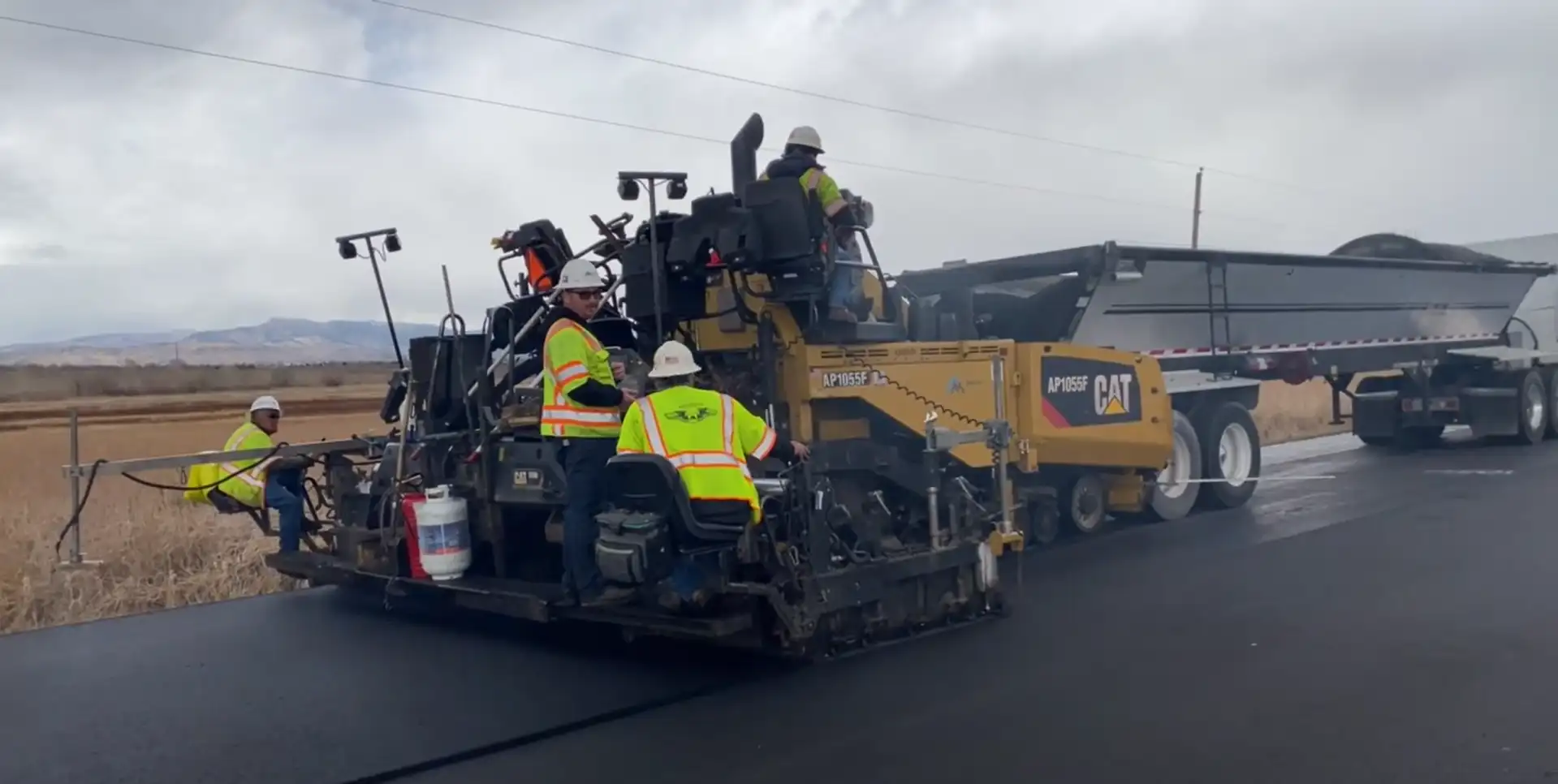
Dry process ECR takes a different approach. The engineered crumb rubber is added directly at the asphalt plant, typically through a loss-in-weight feeder, RAP collar, fiber feeder, or similar plant addition system. Once introduced into the mixing chamber, the ECR distributes throughout the asphalt mixture like a fine aggregate or additive.
This distinction is critical: dry process ECR modifies the asphalt mixture, not just the binder.
Because the rubber remains as a solid particle within the mix, performance should be evaluated through mixture-level testing such as Balanced Mix Design, IDEAL-CT, IDEAL-RT, Hamburg Wheel Tracking, Disk-Shaped Compact Tension testing, and field performance reviews. Binder-only tests may not fully capture the benefits of dry process rubber because the rubber is working inside the compacted asphalt structure.
Benefit 1: Improved Cracking Resistance
One of the most important benefits of ground tire rubber asphalt is improved cracking resistance.
Cracking is one of the most common pavement failure mechanisms. It can result from traffic loading, thermal movement, aging, reflective cracking, insufficient binder content, or poor mixture flexibility. Once cracks form, water can enter the pavement structure and accelerate deterioration.
Dry process ECR helps address cracking through two primary mechanisms.
First, rubber particles absorb lighter fractions of the asphalt binder during mixing, storage, transportation, and placement. This interaction causes the rubber particles to swell and contributes to a more flexible, energy-absorbing mixture.
Second, the rubber particles act as crack-deflecting and crack-pinning inclusions inside the asphalt mixture. When a crack begins to form, the rubber particles can help interrupt crack growth, dissipate fracture energy, and slow propagation through the pavement layer.
This is one of the reasons dry process ECR is especially valuable in overlays, high-stress pavement sections, and applications where long-term cracking resistance is a priority.
Benefit 2: Better Rutting Resistance Under Traffic
Ground tire rubber asphalt is often associated with flexibility, but properly designed ECR-modified mixtures can also improve rutting resistance.
Rutting occurs when pavement deforms under repeated heavy loads, especially at high temperatures. Truck traffic, slow-moving loads, intersections, industrial routes, and high-volume corridors are common locations where rutting becomes a major concern.
Dry process ECR can increase mixture stiffness and improve resistance to permanent deformation. This gives agencies and producers a way to design asphalt mixtures that are more resistant to rutting while still maintaining strong cracking performance.
That balance is important. Traditional mix design has often forced engineers to choose between rut resistance and cracking resistance. A mix that is too stiff may resist rutting but crack early. A mix that is too soft may resist cracking but deform under traffic. ECR helps support a more balanced performance profile, making it a useful tool within Balanced Mix Design programs.
Benefit 3: Polymer-Level Performance Potential at Lower Cost
Many agencies rely on polymer-modified asphalt to improve pavement performance. Polymer-modified binders can be effective, but they also increase material cost, complicate logistics, and may reduce plant production efficiency.
Dry process ECR gives agencies and asphalt producers another option. By adding engineered crumb rubber directly at the plant, producers can often achieve performance characteristics comparable to polymer-modified mixtures while simplifying production and reducing modification costs.
Because ECR is added during mix production, it eliminates the need for terminal blending and avoids some of the handling challenges associated with modified binders. This can help producers maintain flexibility in scheduling, binder sourcing, and plant operations.
For public agencies, the economic value is even broader. A pavement that resists cracking and rutting longer can reduce maintenance frequency, extend service life, and improve lifecycle cost performance.
Benefit 4: A Practical Sustainability Solution
Ground tire rubber asphalt supports a circular infrastructure model by recycling scrap tires into long-life pavement systems.
Scrap tires are a persistent waste stream. When processed into engineered crumb rubber and incorporated into asphalt pavement, they become a useful construction material rather than a disposal problem.
This creates several sustainability benefits:
- Diverts scrap tire rubber from landfills and stockpiles
- Reduces reliance on virgin polymer modifiers
- Supports recycled-content infrastructure goals
- Helps agencies meet sustainability and circular-economy objectives
- Converts waste rubber into a performance-enhancing pavement material
For DOTs, municipalities, and infrastructure planners, this matters because sustainability goals must still be supported by engineering performance. Dry process ECR is not simply a recycled-content story. It is a pavement performance technology that also provides a strong environmental benefit.
Benefit 5: Plant-Friendly Production
One of the biggest advantages of dry process ECR is that it fits into existing asphalt production systems.
ECR can be added using equipment familiar to many asphalt producers, including modified fiber feeders, bulk silos, or loss-in-weight feeder systems. In drum plants, it is typically introduced into the mixing chamber where binder is added, often through the RAP collar area. In batch plants, ECR can be weighed and added as part of the batch process.
This makes implementation practical for producers who want to modify asphalt mixtures without converting to terminal-blended rubber binder systems.
Accurate feeding is also important. Loss-in-weight feeder systems allow producers to control dosage and document feed rates during production. This supports agency confidence, quality control, and post-production verification.
Benefit 6: Better Use of Fine Rubber Particle Size
Particle size is one of the most important engineering variables in ground tire rubber asphalt.
Coarser rubber particles may provide some benefits, but they do not create the same total surface area as finer engineered crumb rubber. Fine ECR particles provide more contact area with the asphalt binder and help distribute rubber more evenly throughout the mixture.
This improves modification efficiency. Instead of relying on a smaller number of larger rubber particles, dry process ECR creates a broader network of fine rubber inclusions within the asphalt mixture. That network helps support crack resistance, rut resistance, and mixture durability.
Elastiko ECR’s fine gradation is one of the reasons it can be added through the dry process while still producing strong mixture-level performance.
Benefit 7: Skid Resistance and Surface Performance
Ground tire rubber asphalt can also support improved pavement surface characteristics.
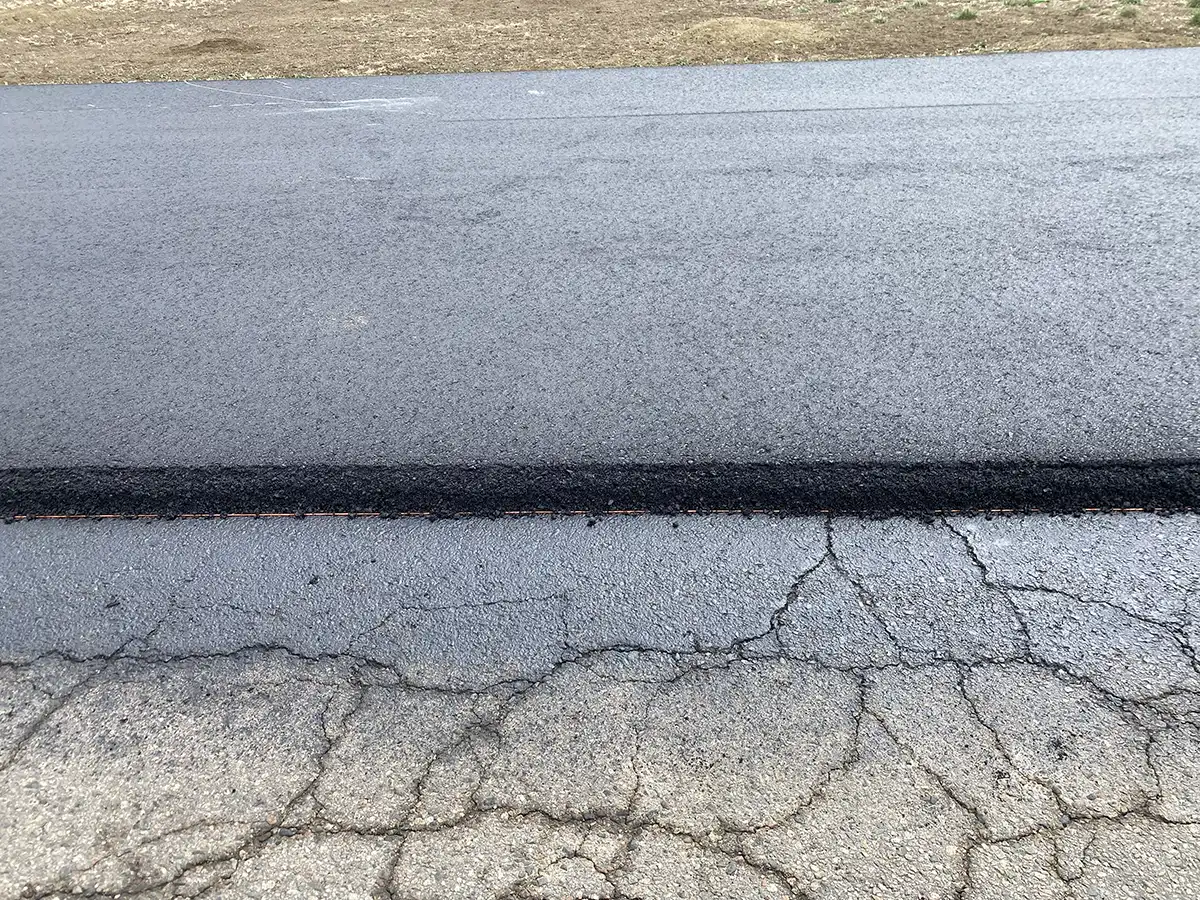
Research and field testing have shown that crumb rubber can improve skid resistance in certain asphalt mixtures. Rubber particles at or near the pavement surface can contribute to surface texture and friction performance. This is especially valuable in wet-weather safety conditions and high-traffic corridors where friction is a priority.
In SMA and other higher-binder mixtures, rubber can also help reduce draindown risk by increasing binder viscosity and improving binder distribution. Better binder distribution can reduce the likelihood of flushing, which is important because flushing can reduce pavement friction.
For agencies, this means ECR-modified asphalt can provide benefits beyond structural performance. It can also contribute to surface safety and ride quality when properly designed and constructed.
Benefit 8: Supports Balanced Mix Design
Balanced Mix Design is changing how agencies evaluate asphalt mixtures. Instead of relying only on volumetrics or binder grade, BMD uses performance testing to evaluate both rutting resistance and cracking resistance.
Dry process ECR fits naturally into this framework.
Because ECR modifies the mixture, its benefits are best measured at the mixture level. Tests such as IDEAL-CT, Hamburg Wheel Tracking, IDEAL-RT, and other performance-based methods allow engineers to see how the completed asphalt mixture responds to cracking and rutting conditions.
This is important for DOTs and pavement engineers because it aligns material selection with actual field performance. Rather than assuming performance based only on binder properties, BMD allows agencies to validate how the complete mixture behaves.
Mix Design Considerations for ECR
To get the full benefit of dry process ECR, the mixture must be designed and produced correctly.
Because ECR behaves like a fine solid material with significant surface area, mix designers must account for binder film thickness and rubber absorption. Asphalt Plus guidance recommends supplemental binder when ECR is added, helping ensure that the mixture does not become dry or difficult to compact.
This is a key engineering point. Rubber should not be treated as binder replacement. It is a mixture modifier that interacts with binder. The mixture still needs enough asphalt binder to properly coat aggregate, account for absorption, and meet volumetric and performance requirements.
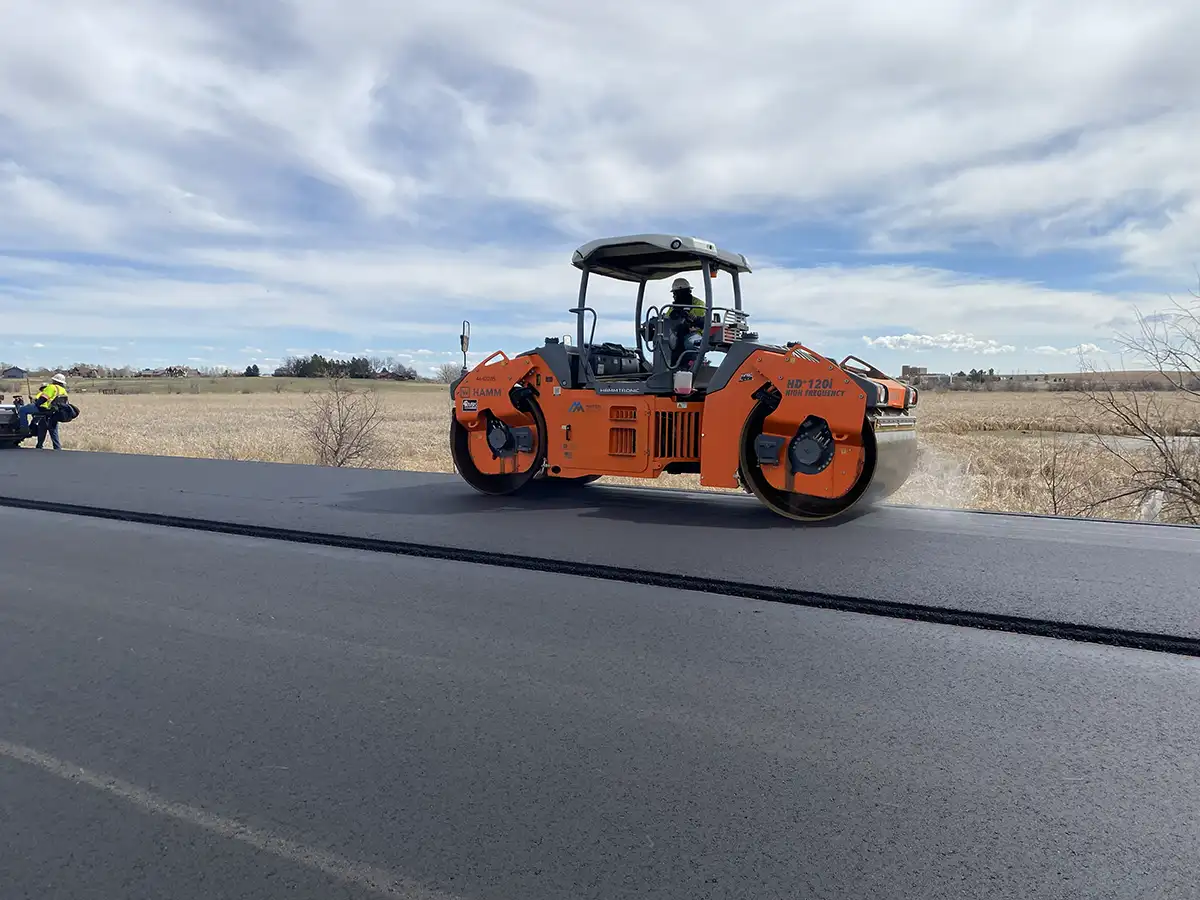
Proper mixing, dwell time, temperature control, and compaction practices are also important. When designed and handled correctly, ECR-modified mixtures can be produced using standard asphalt plant workflows while delivering enhanced performance.
Why Ground Tire Rubber Asphalt Matters Now
Agencies are under pressure to build longer-lasting pavements with tighter budgets and stronger sustainability expectations. At the same time, traffic loads continue to increase, and many pavement networks are aging faster than available maintenance funding can keep up.
Ground tire rubber asphalt addresses these challenges directly.
It improves pavement performance. It recycles scrap tire rubber. It offers a cost-effective alternative to traditional polymer modification. It can be produced through existing asphalt plant infrastructure. And it aligns with modern Balanced Mix Design principles.
For state DOTs, municipalities, contractors, and asphalt producers, dry process ECR offers a practical path toward better pavement systems without unnecessary production complexity.
Conclusion: Dry Process ECR Turns Recycled Rubber Into Pavement Performance
Ground tire rubber asphalt is more than a recycled-material concept. When engineered correctly and applied through a proven dry process, it becomes a high-value asphalt mixture modification technology.
Elastiko® ECR from Asphalt Plus is designed to deliver that value through high rubber content, fine particle size, controlled production characteristics, and practical plant application. By modifying the asphalt mixture rather than relying only on binder modification, dry process ECR helps improve cracking resistance, rutting resistance, skid resistance, sustainability, and lifecycle economics.
As agencies continue moving toward performance-based specifications and sustainable infrastructure systems, ground tire rubber asphalt will play an increasingly important role in the future of pavement design.
For asphalt producers, contractors, and public agencies looking for polymer-level performance with lower cost and better sustainability, dry process ECR provides a proven, field-ready solution.