Rubberized Asphalt vs Polymer
Rubberized asphalt improves durability, sustainability, and performance by incorporating ground-up rubber from recycled tires. This article explains how Elastiko rubber asphalt-modified mixes exhibit similar rutting and cracking resistance to polymer-modified mixes.
Rubber asphalt is not new, but it is starting to resurface throughout the United States. It is produced by grinding up whole scrap tires from automobiles, then mixing the ground tire material with asphalt before paving. As the largest market for ground tire rubber, rubberized asphalt consumes an estimated 220,000,000 pounds, or around 12 million tires annually. More and more states are recognizing the benefits of rubber asphalt and are taking this proven technology further by refining and mastering the process.
In 2015, the Illinois Tollway Authority commissioned a demonstration project of dry process rubber asphalt pavements. The project was designed to evaluate mix performance in both lab testing and field production. Elastiko Engineered Crumb Rubber was selected as the mix modifier because of its extensive field experience. This joint project included both the Illinois Tollway and the Wisconsin Department of Transportation.
This rubber asphalt demonstration project focused on proving performance in both laboratory and real-world paving environments using dry process Engineered Crumb Rubber.
- Illinois Tollway and Wisconsin DOT participation
- Lab and field validation of dry process rubber asphalt
- ElastikoTM ECR selected due to extensive field experience
- High recycled content including both RAS and RAP
- Successful plant production and laydown on I-88 shoulder paving
1. What is Rubber Asphalt?
Rubber asphalt is an asphalt mixture enhanced with ground tire rubber derived from recycled automobile tires. The rubber is blended into the asphalt mix to improve pavement performance while also creating a productive use for scrap tires that would otherwise enter the waste stream.
The use of rubberized asphalt continues to gain traction across the U.S. as agencies and producers look for more durable, cost-effective, and sustainable paving solutions. With millions of tires being repurposed each year, rubber asphalt supports both better roads and better environmental outcomes.
2. Illinois Tollway Demonstration Project
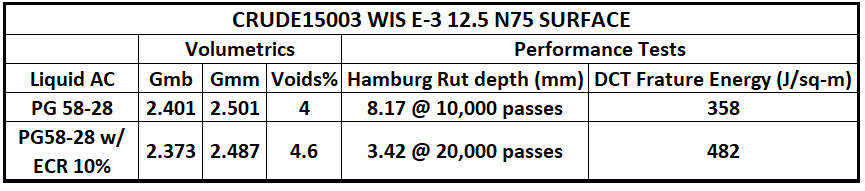
In partnership with STATE Testing of East Dundee, Illinois, the Wisconsin DOT and the Illinois Tollway commissioned two mix designs modified with ElastikoTM Engineered Crumb Rubber. These included a 12.5 mm N80 SMA mix design and a WIDOT WI-12.5 N75 SMA mix.
Both mix designs showed moderately high levels of ABR at 40%, incorporating both RAS and RAP. The designs included a 10% rubber addition by weight of virgin binder (58-28), which translated to approximately 6 pounds of rubber per ton of mix.
3. ECR and Polymer Comparison
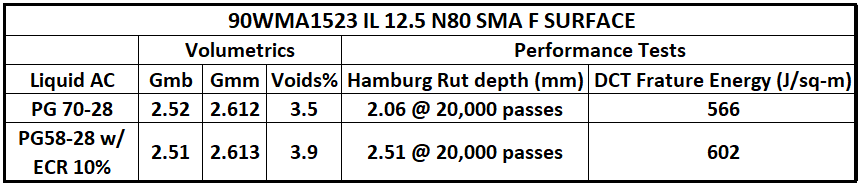
Both mixes were produced in a lab setting to evaluate mix performance. The Tollway SMA was compared to a similar mix design using a 70-28 PMA binder without ECR, while the WIDOT mix design was compared to an unmodified 58-28 hot mix asphalt of similar design.
In comparison with a polymer-modified mix design, the Elastiko rubber asphalt-modified mix exhibited similar rutting and cracking resistance. When compared to a standard hot mix design, the ECR-modified mix outperformed the standard mix in both rutting and cracking resistance.
4. Cost and Production Benefits
Since the ECR modification process was significantly less expensive than more traditional forms of asphalt modification, including terminal blend rubber and polymer modification, while still delivering comparable or better performance, the mixes were approved for plant production and laydown.
Curran Construction produced the materials used to pave several miles of I-88 shoulder in 2015. They reported that the modified rubber asphalt mixes behaved similarly to standard hot mix designs during production and laydown, with no issues reported during any portion of the project.
5. About Asphalt Plus
Asphalt Plus LLC is a specialty chemical and equipment manufacturing company headquartered near Chicago, Illinois. We produce Elastiko engineered crumb rubber additive for rubberized asphalt applications. Over the past two decades, extensive laboratory and field work has created a new binder modification option for asphalt producers.
Dry process rubber modification allows producers to create rubber-modified mixes that perform like polymer-modified mixes without the need for terminal blending. Asphalt Plus engineered rubber has endured a wide range of harsh climate and road use conditions, making it a proven choice for modern pavement design.
6. Field Results and Industry Impact
As a result of this performance, Asphalt Plus has performed exceptionally well with nearly 6 million tons of placed dry mix asphalt. These results demonstrate both the technical capability and large-scale practicality of dry process rubberized asphalt systems.
In addition, Asphalt Plus has assisted the automotive manufacturing industry, the Department of Defense, and the Departments of Energy and Interior in reducing operating costs and environmental impact across a wide range of applications. This track record underscores the value of rubber asphalt as both a performance solution and a sustainability strategy.
Conclusion
Rubber asphalt continues to prove itself as a durable, cost-effective, and environmentally responsible paving solution. Through successful lab validation, field production, and long-term placement results, ElastikoTM Engineered Crumb Rubber has shown that dry process rubber asphalt can deliver performance comparable to or better than other modification methods.
From the Illinois Tollway demonstration project to millions of tons of successful dry mix asphalt placement, Asphalt Plus continues to help agencies, contractors, and producers implement rubberized asphalt solutions that improve road performance while reducing environmental impact.
Request Webinar
Use the form below and we’ll follow up with specs, guidance, and next steps.