ECR Improves Interstate Highway Safety and Performance
In 2022, Missouri DOT evaluated an interstate SMA mix modified with ElastikoR® Engineered Crumb Rubber (ECR), comparing performance against an SMA design using PPA and fibers. Results showed strong durability and approximately 14% better wet traction for the ECR pavement.
Missouri DOT Evaluates ECR for Interstate Highway SMA
In 2022, officials from the Missouri Department of Transportation allowed the replacement of their standard SMA mix design for interstate highway roads with a mix modified with Engineered Crumb Rubber (ECR). This rubberized mix used ElastikoR® ECR as a mix modifier.
When the substitution was allowed, the road agency replaced an SMA mix utilizing Poly-Phosphoric Acid (PPA) as a binder stiffener along with fibers. The replacement mix used ECR and no fibers.
With the new rubberized mix design, two important questions were raised:
- Will the rubber hold the liquid asphalt binder throughout the mix?
- Will the mix allow binder to drain to the bottom of the pavement, permitting flushing or bleeding of excess binder to the surface?
Field Placement on I-70
Several interstate highway miles of each pavement were laid on the eastbound passing lane of I-70 in central Missouri during the hottest time of the year. A few hours after placement, both pavements were opened to heavy truck traffic and heat.
This created a real-world field evaluation under demanding conditions, allowing researchers and agency personnel to compare how the ECR-modified SMA performed against the conventional PPA and fiber system.

Bleeding and Rutting Observations
After three weeks of service, both pavements were evaluated for visible signs of bleeding and rutting. No fat spots, bleeding, or rutting was observed in either pavement.
These findings helped answer the early concern about whether the ECR-modified mix would retain binder effectively under high heat and heavy traffic conditions. In this field evaluation, the rubberized SMA performed without the visible surface issues often associated with binder instability.
Traction Testing Results
Following that evaluation, both pavements were subjected to a traction evaluation. A skid trailer was used to measure the skid resistance of the pavement. This computer-controlled system wets the pavement and then measures the traction of the tires while braking.
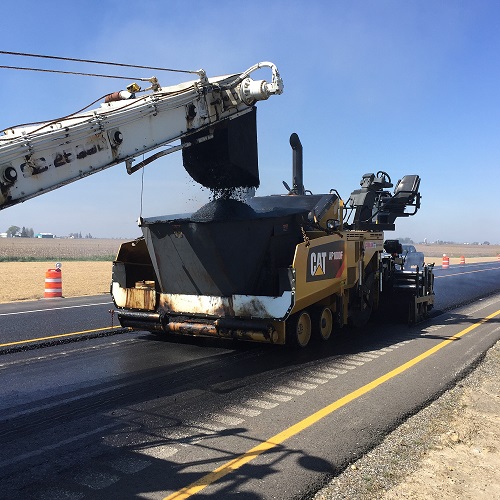
After 144 measurements of skid resistance on the pavements, MODOT researchers found that the ECR pavement showed approximately 14% better traction than the PPA/fiber pavement.
These tests indicate that vehicles will stop more effectively on ECR pavements during wet pavement conditions. In addition to being safer than standard PPA/fiber pavements, ECR pavements are lower cost and very durable.
Project Benefits of ECR
Beyond the traction improvement observed in the Missouri interstate evaluation, ECR offers practical production and paving advantages for agencies and contractors.
Lower Mix Costs
ECR reduces the cost of a two-grade bump by approximately $2 to $4 per mix ton, helping agencies and producers improve performance while controlling material costs.
Faster Plant Throughput
ECR makes your plant run faster compared to polymer modified mixes because lower mix viscosities can permit 10 to 15% faster plant throughput.
Less Waste on Highway Projects
ECR mixes leave the truck with almost no residue in the bed, reducing truck cleanout waste and helping improve jobsite efficiency on large interstate paving projects.
Extended Paving Season
ECR mixes can allow paving and compaction in colder temperatures, which can help contractors and road agencies extend their paving season.
More Efficient Compaction
ECR mixes typically require 10 to 20% fewer roller passes to achieve compliant compaction, helping crews work more efficiently in the field.
Strong Thinlay Performance
Compared to standard unmodified hot mix asphalt, ECR pavements can achieve greater durability with thinner lifts, making them a strong option for thinlay applications.
ECR delivered lower cost, durable performance, and improved wet traction under interstate highway conditions.
Conclusion
The Missouri DOT interstate evaluation demonstrated that ECR-modified SMA can perform under extreme summer heat and heavy truck loading without bleeding or rutting, while also delivering a measurable improvement in wet traction.
For agencies and producers seeking safer pavement, lower costs, and durable performance, ECR offers a proven, field-validated solution for interstate highway applications.